Level 1 - Non-agentic AI
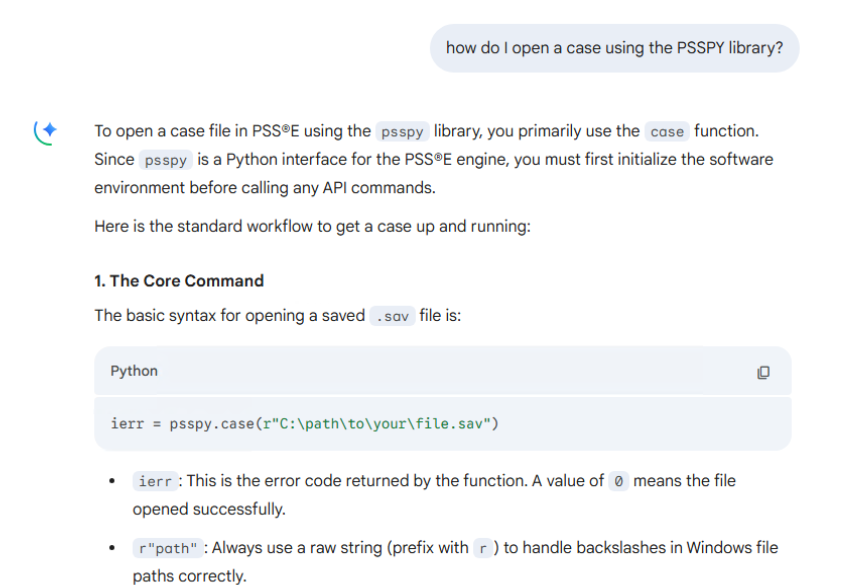
Use Copilot, Gemini, ChatGPT, or others to ask questions about how to run transmission planning studies. Read and interpret the output of the LLM and apply it to the problem at hand. It is not able to take any action on your behalf and has no access to tools.
Level 2 - Agentic Chat Interface
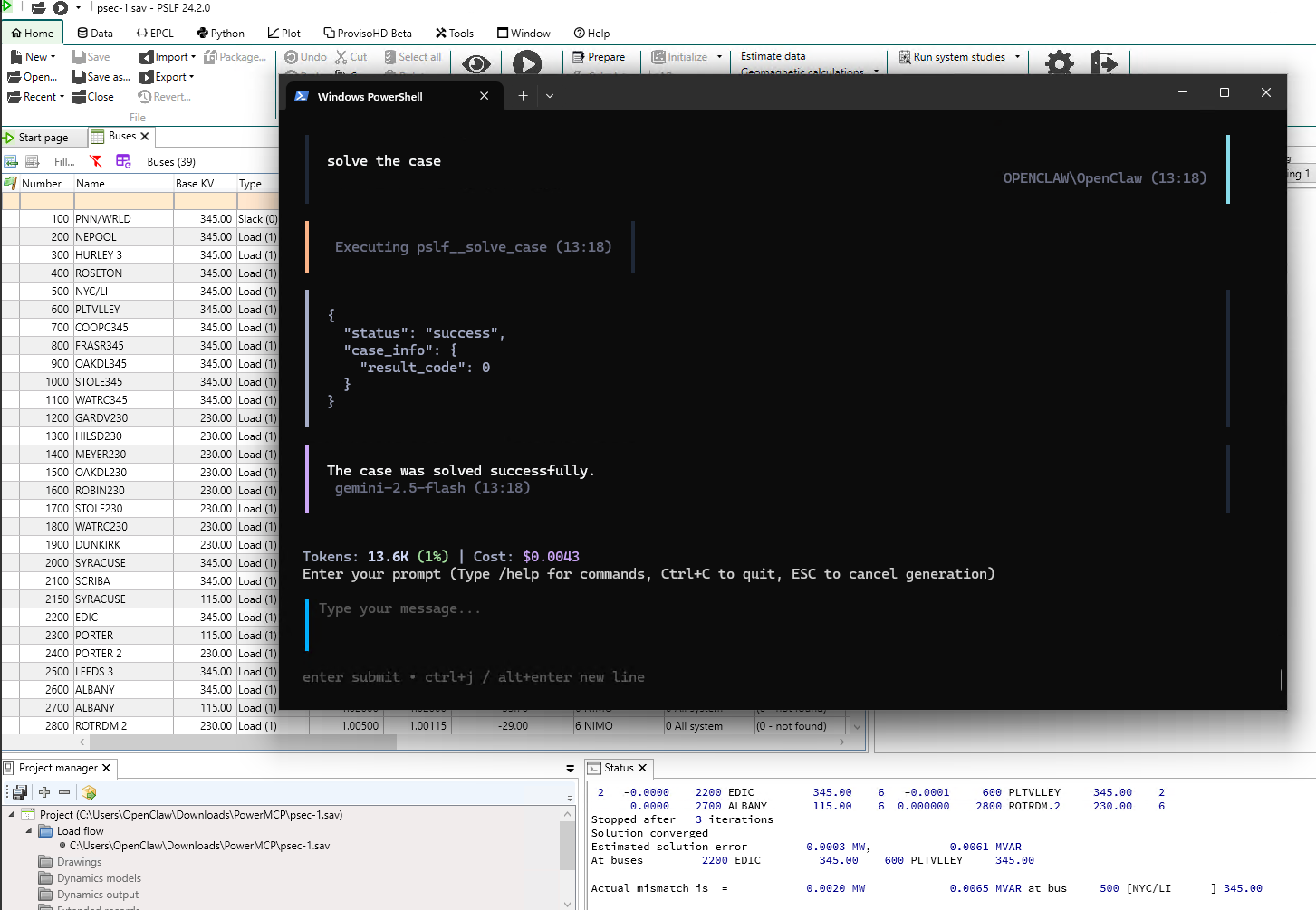
At IEEE GM in Austin last July, I was introduced to PowerAgent which as far as I’m aware is the first agentic AI power systems tool. The most basic level is a chat interface through mcphost, Claude Desktop, etc. This allows the user to describe a task to the agent and wait for a reply, for example asking it to open and solve an IEEE 39 bus system.
Level 3 - Agentic Tool Calling from Defined Process
The next iteration was manual workflow creation through tools like LangGraph or especially n8n. I didn’t learn of these until around 6 months ago when I began working on PowerWF from the same authors as PowerMCP. This allows a PowerSystems engineer to program a process, like real time contingency analysis, to be run on a set trigger or schedule, for example fetch a case from an FTP server and run contingency analysis every 5 minutes then summarize the results to the operator.
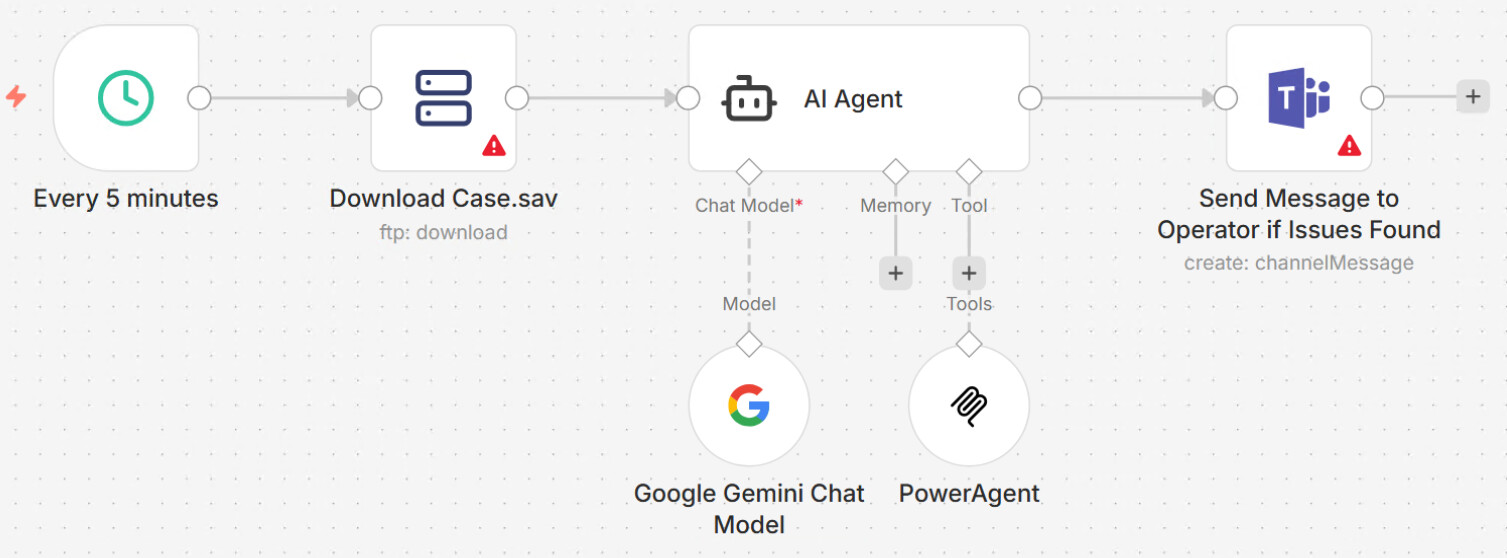
These tools support features called “human-in-the-loop” where a human can be asked before every tool call.
Level 4 - Fully Autonomous Agents
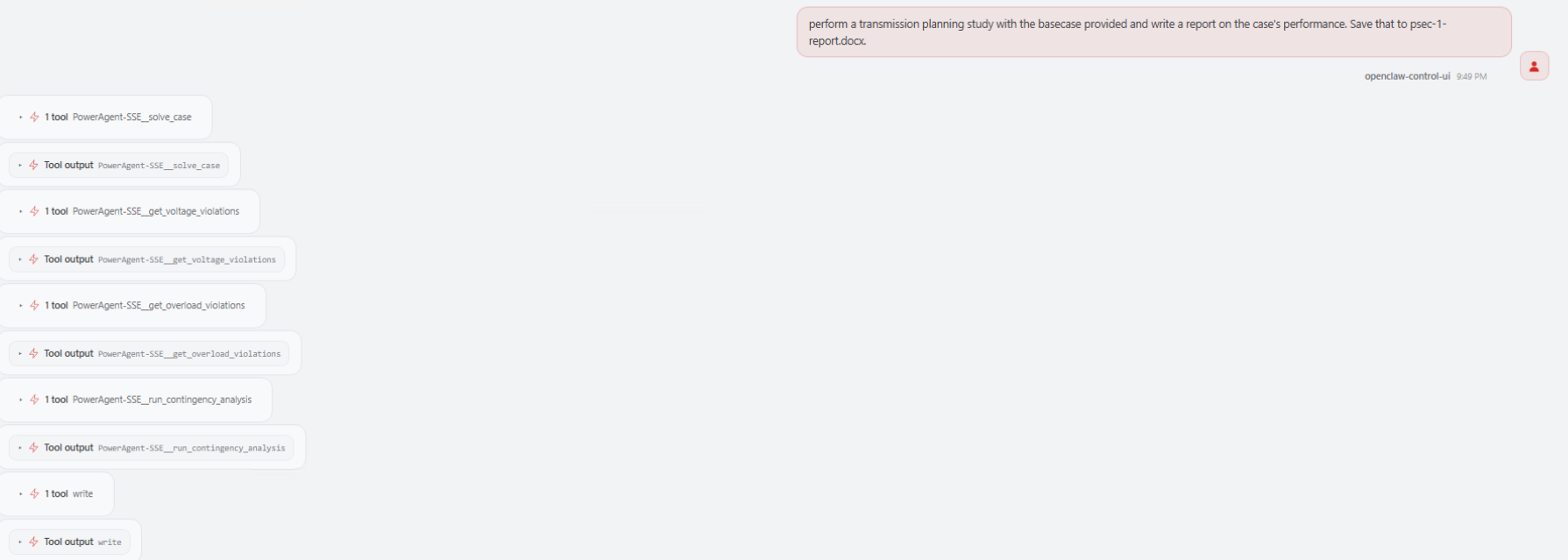
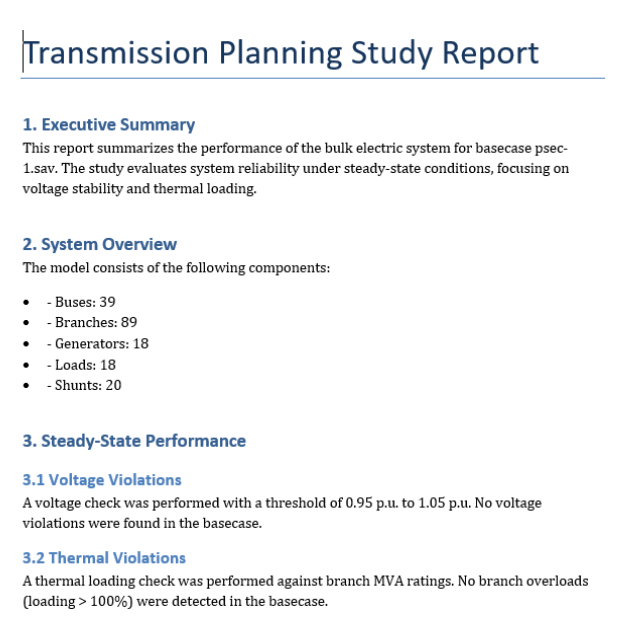
The latest iteration of agents is fully autonomous through tools like OpenClaw. This has gone especially viral around a month ago but the tools have been around for several months already. These can combine numerous tool calls, do basic problem solving, remember long context windows, and more. It will eventually be possible to give a basecase and ask for a certain type of study to be performed and get a draft study report in mere minutes. Or request a model for a piece of equipment and allow the agent to search the internet for datasheets and generate a model that replicates the behavior in the powerflow tool of choice.
Discussion
What does everyone think about the application of tools like these?
Is there anything exciting about the state of the tools today?
Where do we see the tools going in the future?
Is there a Level 5 automation tool out there?
What are some ways the tools can be improved?
What redlines should be encoded into fully autonomous agents like OpenClaw?